

Brown Spots After Summer? Here’s What I Would, and Wouldn’t Do
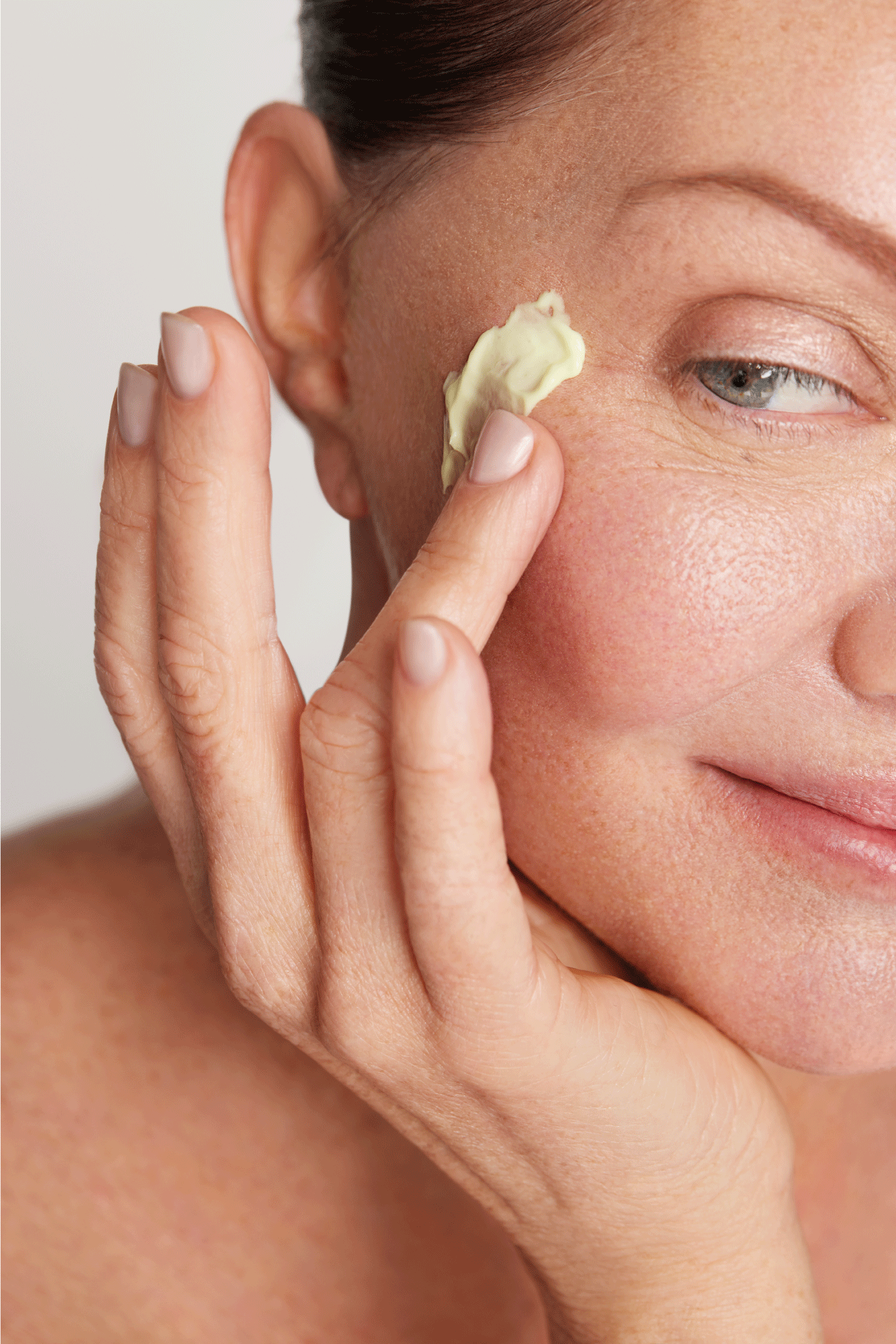
Before You Start Attacking Every Spot You See This September, Let’s Talk Pigmentation
September has a way of revealing things.
What we want to change in our lives.
What’s been sitting untouched in the closet.
And apparently every brown spot on our faces.
You spend summer thinking your skin looks bronzy and alive.
Then one morning the light changes and you’re standing six inches from the mirror asking:
“Was THAT there before?”
Maybe.
Maybe not.
Either way, please step away from the magnifying mirror.
First, Not Every Brown Spot Is the Same Thing
We use “dark spots” as though every form of pigmentation has the same cause.
It doesn’t.
What you’re seeing could be cumulative sun-related pigmentation, post-inflammatory hyperpigmentation, melasma, freckles or something else entirely.
Solar lentigines often called sun spots or age spots are associated with cumulative UV exposure. Melasma behaves differently. Post-inflammatory marks behave differently again.
And this matters because treatment isn’t one-size-fits-all.
Most importantly: a new, unusual or changing lesion deserves evaluation by a qualified medical professional.
Skincare should never be used to self-diagnose a suspicious spot.
What I Wouldn’t Do: Attack It
I understand the temptation.
Acid! Scrub! Peel! Retinol! Brightening serum!
All tonight!
No.
Inflamed skin is rarely prettier skin, and excessive exfoliation can create irritation that makes pigmentation harder, not easier to manage.
Your face is not a countertop.
We don’t need to remove the top layer by Friday.
What I Would Do: Protect First
If pigmentation is your concern and you aren’t consistently wearing sunscreen, that’s where I’d begin.
Not with the $150 brightening serum.
With SPF.
Every morning.
Yes, even in September.
Yes, even when it’s cloudy.
Yes, even if you’re mostly driving around doing errands.
UV exposure can contribute to existing pigmentation, and visible light may also play a role in some pigment conditions. Tinted mineral sunscreens containing iron oxides are therefore sometimes recommended for people dealing with melasma or hyperpigmentation.
I personally rotate sunscreens based on what I’m doing and how I want my skin to look that day.
The important part is using one.
Then Look at Brightening Ingredients
This is where skincare gets interesting.
Ingredients commonly used in pigmentation routines include vitamin C, niacinamide, retinoids, azelaic acid and tranexamic acid.
But don’t interpret that list as instructions to buy all five tonight.
Your ideal routine depends on your skin, sensitivity, pigmentation type and everything else you’re already using.
One KismetK option specifically designed around visible tone is iS Clinical Brightening Serum.
I also like vitamin C as part of a broader antioxidant-focused morning routine, particularly when paired with diligent SPF.
Then, depending on the person, nighttime might include a retinoid or another targeted treatment.
Exfoliation: Useful, Not a Personality Trait
I love a good exfoliation.
I also love knowing when enough is enough.
Current dermatologist guidance around pigmentation cautions against excessive exfoliation because inflammation can exacerbate discoloration. Two or three times per week is often plenty, and some skin needs less.
For experienced users looking for a more active at-home option, KismetK carries the iS Clinical Extra Strength Active Peel Brightening System, designed to visibly resurface and brighten while supporting hydration.
But this is exactly where knowing your skin matters.
If your barrier is compromised, I’d repair that first.
Give Pigmentation Time
This might be the least glamorous advice in skincare.
Pigmentation takes patience.
You’re not undoing years of cumulative exposure in seven nights.
Think in months, not days.
Take photos in the same lighting.
Keep your routine consistent.
Protect your skin every morning.
Then evaluate.
Skincare becomes much less frustrating when we stop expecting every product to perform like an Instagram filter.
My September Pigmentation Philosophy
Protect.
Support the barrier.
Treat intentionally.
Don’t over-exfoliate.
Give it time.
And have anything questionable evaluated professionally.
There’s no shame in summer showing up on our skin.
We’ve lived.
We’ve traveled.
We’ve been outside.
We’ve enjoyed ourselves.
Now we simply care for what comes next.
That’s healthy maturing to me.
KismetK Pigmentation Edit: iS Clinical Brightening Serum + a daily broad-spectrum SPF. For experienced skincare users, explore the iS Clinical Extra Strength Active Peel Brightening System based on your skin’s tolerance.

Comments