

MOTS-c Benefits: Why This Mitochondrial Peptide Has My Attention
Why has MOTS-c become one of my favorite peptides?
I have become obsessed with mitochondria. The deeper I go into healthy aging, the more I return to one truth: our energy and skin health begins inside our cells.
That is why MOTS-c has become a favorite peptide. It is mitochondria-forward, influencing how cells respond to fuel, stress, and energy demands after 40.
What is MOTS-c, and what makes it different?
MOTS-c is a naturally occurring peptide encoded within mitochondrial DNA. It is made from 16 amino acids and acts as a messenger between the mitochondria and the rest of the cell.
Mitochondria do more than produce energy. They help regulate metabolism, stress responses, and cellular adaptation. MOTS-c helps communicate what the cell needs when energy becomes scarce or demand increases.
How does MOTS-c communicate with our cells?
During metabolic stress, MOTS-c can move into the cell’s nucleus and may influence genes involved in metabolism and stress resistance. It is also associated with AMPK, an enzyme that works like a cellular fuel gauge.
This fascinates me: MOTS-c does not “give” us energy. It appears to help cells use available energy more efficiently.
What MOTS-c benefits are researchers studying?
Researchers are exploring MOTS-c benefits related to energy utilization, insulin sensitivity, metabolic flexibility, exercise performance, and healthy aging. Much of the treatment evidence remains preclinical, so these are promising areas of study, not guaranteed human outcomes.
MOTS-c may help cells use glucose and shift between carbohydrates and fat as fuel. That metabolic flexibility can become more challenging with age.
Exercise appears to activate our natural MOTS-c response. In 10 healthy young men, exercise increased MOTS-c in muscle and circulation. Animal studies suggest possible effects on endurance and physical stress adaptation.
Researchers are also examining oxidative stress, inflammatory signaling, and brown fat, which contains many mitochondria and burns energy to generate heat.
Why may MOTS-c matter during and after menopause?
Menopause can change insulin sensitivity, body composition, bone density, muscle, and energy. That makes this mitochondrial messenger especially interesting now.
Preclinical studies using models of estrogen loss suggest MOTS-c may influence fat distribution, insulin resistance, and bone loss through pathways including AMPK. These results are intriguing, but they do not yet establish MOTS-c as a proven menopause therapy.
Mitochondrial function can become less efficient with age. For me, mitochondrial benefits and antiaging are not about fighting age. They are about remaining strong, responsive, and fully alive.
How can KismetK support a mitochondria-forward beauty ritual?
MOTS-c is not a skincare ingredient, and no serum reproduces its actions. We can support visible cellular aging topically while movement, sleep, and nourishment support the whole body.
Which KismetK products fit this cellular-minded approach?
Young Goose YOUTH RESET is one I love for evenings. NAD+ precursors, spermidine, peptides, vitamin C, and fermented resveratrol support the look of repair and resilience.
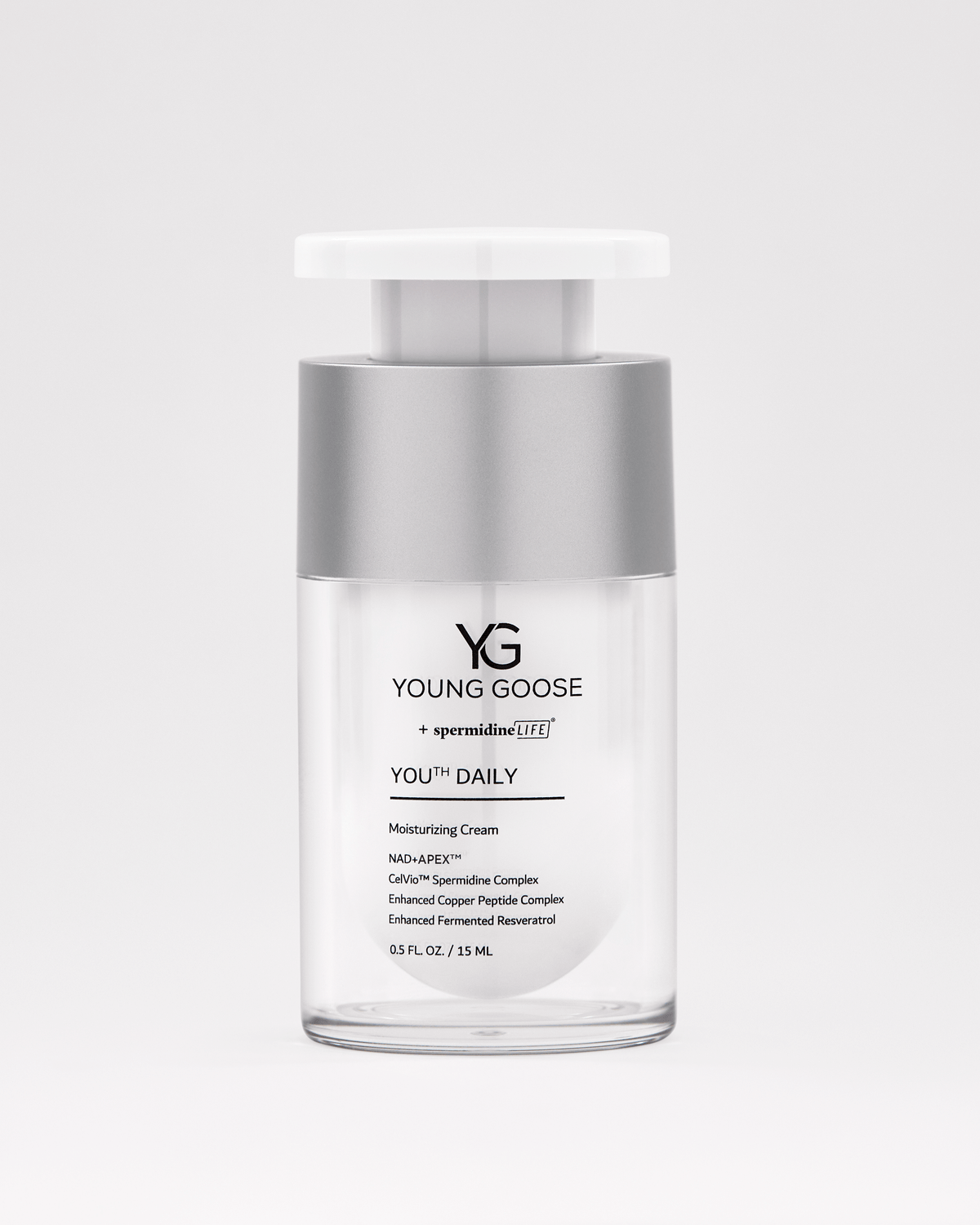
For daytime, Young Goose YOUTH DAILY pairs NAD+ precursors with spermidine, peptides, and resveratrol. When my barrier needs comfort, I reach for Young Goose BIO-BARRIER, with bioidentical lipids and vitamins E and F.
This is the KismetK philosophy in practice: support the skin from the outside while remaining curious about what is happening within.
What is Karina’s take on MOTS-c?
MOTS-c brings the conversation back to the source: energy inside our cells. I love anything that deepens understanding instead of chasing a surface fix.
Still, favorite does not mean blindly accepted. MOTS-c remains experimental. The FDA cites insufficient human safety information for compounded MOTS-c and possible immune reactions and impurities. Speak with a qualified clinician before considering it.
My simplest takeaway: exercise naturally stimulates this mitochondrial pathway. Sometimes new science leads us back to rituals our bodies have always recognized.
“Real vitality begins beneath the surface, in the quiet cellular conversations that determine how we create, use, and protect our energy.”
Frequently Asked Questions
Q: What are the main MOTS-c benefits being studied?
A: Research is exploring insulin sensitivity, metabolic flexibility, exercise adaptation, inflammation, and age-related resilience. Most therapeutic findings are still from laboratory and animal studies.
Q: How can I support MOTS-c naturally?
A: Exercise appears to stimulate the body’s own MOTS-c response. Consistent movement, sleep, strength training, and metabolic health remain meaningful foundations.
Q: Is MOTS-c a weight-loss peptide?
A: MOTS-c is better understood as an experimental metabolic-signaling peptide, not a proven weight-loss drug. Any human weight or body-composition benefit remains unconfirmed.
Q: Is compounded MOTS-c safe?
A: Human safety and optimal dosing have not been established. Speak with a licensed clinician who understands your health history and peptide sourcing.
The Bottom Line
MOTS-c places mitochondria, cellular energy, and adaptation at the center of healthy aging. Its early research on metabolism, exercise, and menopause deserves attention.
Stay curious and discerning. Explore KismetK’s cellular-minded skincare or book a virtual consultation for a ritual built around your season of life.
About Karina
Karina is the founder of KismetK and a skincare and whole-body wellness expert with 25+ years of experience. Her inside-out approach helps women navigate changing skin with sophisticated products, honest education, and greater self-knowledge.



Comments